
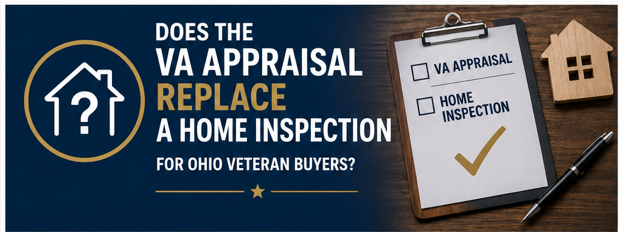
Does the VA appraisal replace a home inspection for Ohio veteran buyers?
No. The VA appraisal is required on every VA purchase, but it protects the lender — not you. It establishes the home's market value and checks basic safety requirements called Minimum Property Requirements (MPRs). It does not evaluate the home's overall condition the way a home inspection does. In Ohio, veteran buyers should treat the VA appraisal and a home inspection as two separate layers of protection — one mandatory, one optional but essential.
By Mark Dunn | June 30, 2026
This is one of the most common questions I get from veteran buyers in Columbus and Central Ohio: "I'm using a VA loan — do I still need a home inspection?"
The short answer is yes. The longer answer is that the VA appraisal and a home inspection are doing completely different jobs, and understanding the difference could save you from a very expensive surprise after closing.
Here's how each one works, what changed with the 2026 VA rule updates, and what to do if your appraisal comes in under your offer price.
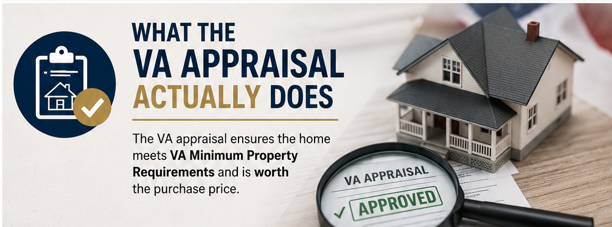
What the VA Appraisal Actually Does
Every VA loan requires a VA appraisal — ordered by your lender, performed by a VA-approved appraiser. You don't choose the appraiser, and you can't waive the appraisal, even if you're willing to take on the risk yourself.
The appraiser has two jobs:
- Establish market value. The appraiser compares the home to recent comparable sales to determine what it's worth. This protects the VA and your lender from backing a loan on an overpriced property.
- Verify MPR compliance. The appraiser checks that the home meets the VA's Minimum Property Requirements — a baseline set of safety, structural, and habitability standards. The home must be safe, sound, and sanitary to qualify for VA financing.
In practice, the appraiser does a visual walk-through: opening doors, checking faucets, flipping light switches, viewing the roof from the ground. They're not crawling into attics, scoping sewer lines, testing the electrical panel, or evaluating how efficiently your HVAC runs.
A VA appraisal in Ohio typically costs $600–$1,000 depending on the property and location. Plan for it in your budget — it's paid upfront and is not refundable if the deal falls through.
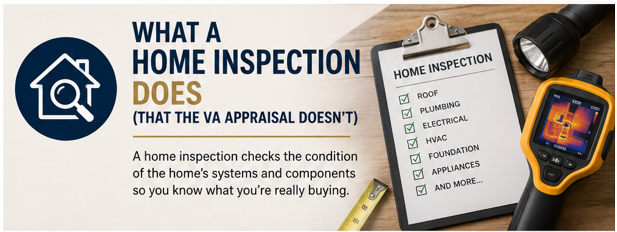
What a Home Inspection Does (That the VA Appraisal Doesn't)
A home inspection is a comprehensive, system-by-system evaluation of the property. A licensed inspector examines the structure, roof, HVAC, plumbing, electrical, foundation, attic, basement, windows, and more — and then hands you a detailed report of what they found.
The VA does not require this. But here's the truth: the appraisal protects the lender. The inspection protects you.
I always recommend a home inspection regardless of loan type. In Central Ohio, a standard inspection runs $350–$600 depending on the home's size and age. That's a small price compared to discovering after closing that the HVAC system is on its last legs, the basement has a water intrusion issue that wasn't visible on the walk-through, or the roof has two more years left in it.
The inspection also gives you negotiating leverage. If the inspector finds problems during the inspection contingency period, you can ask the seller to make repairs, offer a credit, or reduce the price. Once you've closed, those options are gone.
Bottom line: the VA appraisal tells you what the home is worth to the bank. The home inspection tells you what you're actually buying.
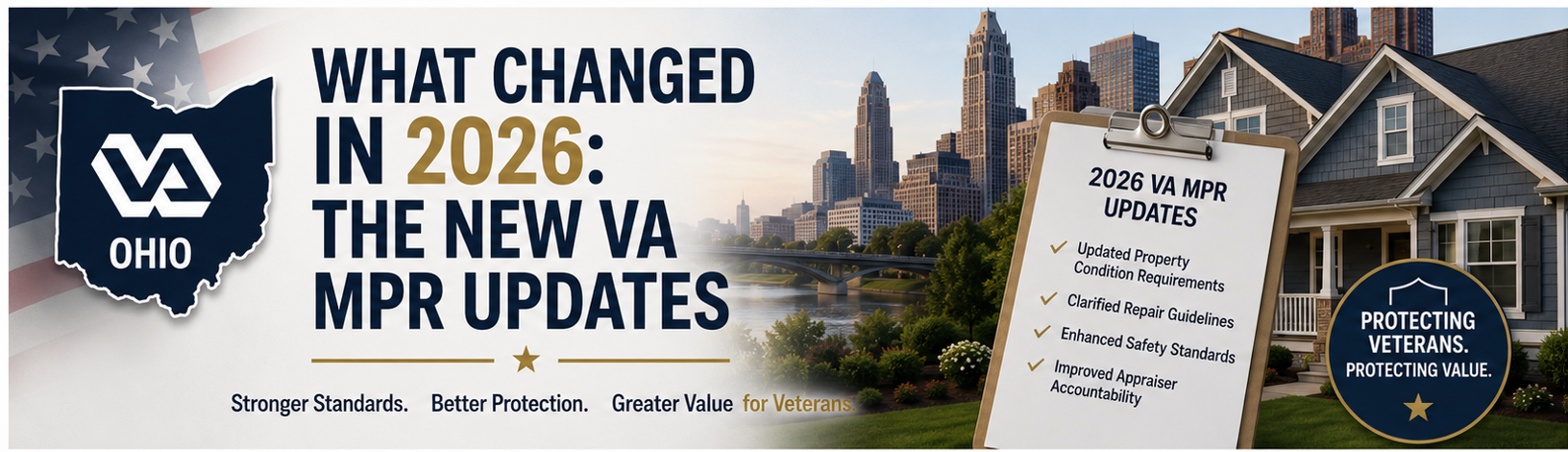
What Changed in 2026: The New VA MPR Updates
On February 27, 2026, the VA officially removed five Minimum Property Requirements from its lender handbook — effective for any appraisal ordered on or after May 1, 2026.
Here's what was removed:
- Radon certification for new construction. VA appraisers no longer require radon testing or certification on newly built homes. The VA now defers to local codes and EPA guidelines. (Note: this applies to new construction only. Radon testing is still a smart idea on any Ohio home — our state has high radon risk, and testing during your inspection period is the right move.)
- Shed and outbuilding requirements. Detached structures like sheds, workshops, and detached garages no longer need to meet VA MPRs.
- Exterior paint on post-1978 homes. Peeling or damaged exterior paint on homes built after 1978 is no longer flagged as a required repair.
- Oxygen depletion sensors for non-vented heaters. This compliance requirement has been removed.
- Non-vented fireplace compliance. No longer required for appraisals ordered after May 1, 2026.
One detail worth knowing: the rules that apply are determined by the date the appraisal is ordered, not the date it's completed. If your lender ordered the appraisal on April 30, the old rules apply. May 1 or later, the new ones do.
The core MPRs that protect veterans from structural defects, unsafe systems, and serious health hazards remain fully in place. The removal of these five requirements simply modernizes the process and removes compliance friction on issues that weren't meaningfully protecting buyers anyway.
For veteran buyers in Central Ohio, the most meaningful of these changes is probably the radon exemption for new construction — especially in Licking County and the New Albany area, where new builds are going up at a fast pace. You'll still want to test for radon during your inspection period. But the appraisal will no longer hold up your closing over a builder's radon certification.
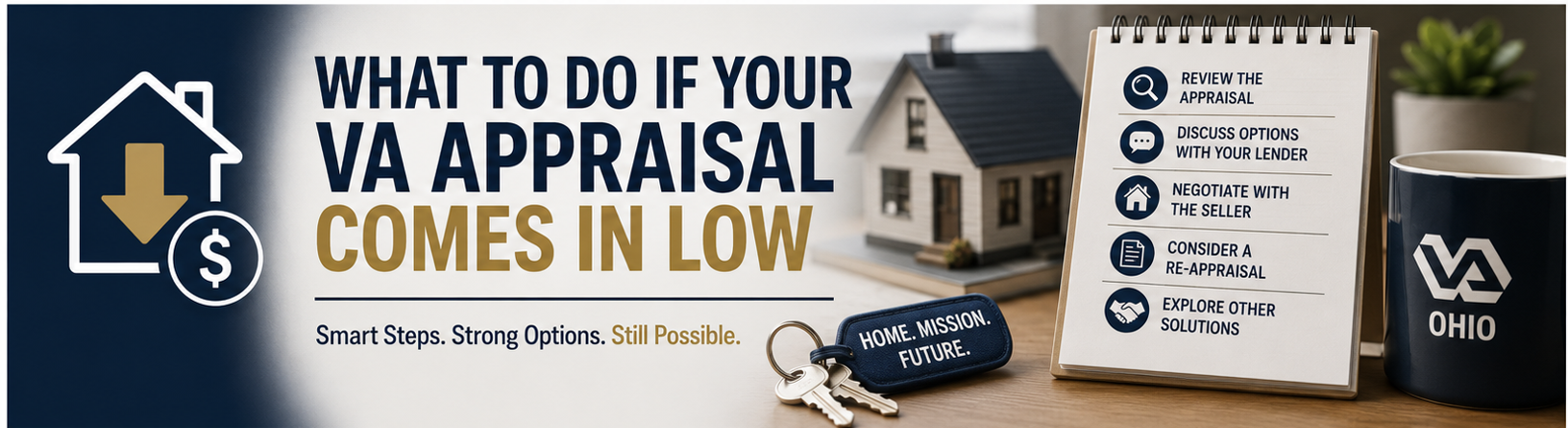
What to Do If Your VA Appraisal Comes In Low
In a competitive market like Columbus — where median home prices are hovering around $301,000–$350,000 and multiple-offer situations still happen — VA buyers sometimes find themselves in a spot where the appraised value comes in below what they offered. Here's what you can do.
Option 1: Ask the seller to reduce the price. This is the most common outcome. Many sellers would rather reduce by $10,000–$20,000 than restart the process with a new buyer and another appraisal cycle. Your agent can present this as a straightforward renegotiation — not a collapse.
Option 2: Request a Reconsideration of Value (ROV). After the Notice of Value is issued, you can formally challenge the appraisal by submitting comparable sales the appraiser may not have considered. ROVs typically take 5–10 business days. Your agent and lender will put together the submission.
Option 3: Use the Tidewater Initiative. If the appraiser believes the value will be short before they finalize it, they'll trigger the Tidewater process — a 48-hour window for your agent and lender to submit additional comps. This happens before the Notice of Value is issued, so it's faster than a formal ROV. A good VA-experienced agent knows how to take full advantage of this window.
Option 4: Pay the gap in cash. If the home is worth it to you and you have the funds, you can cover the difference between the purchase price and appraised value out of pocket. This amount can't be financed — it has to come from verified cash. It also doesn't count as your down payment.
Option 5: Use the VA Escape Clause and walk. Every VA purchase contract includes an escape clause that gives you the right to cancel and receive your full earnest money deposit back if the appraisal comes in below the purchase price. This protection is non-negotiable — sellers cannot remove it from a VA contract. If the deal doesn't work at the appraised value and neither side can bridge the gap, you can walk away without losing your earnest money.
I've helped veteran buyers navigate all five of these scenarios in Central Ohio. The right move depends on the specific deal, the seller's situation, and how much you want the home. There's no one-size-fits-all answer — but there's always a path forward.

Frequently Asked Questions
Does the VA appraisal replace a home inspection in Ohio?
No. The VA appraisal establishes the home's market value and verifies basic safety requirements (called Minimum Property Requirements). It is not a comprehensive inspection of the home's condition. The VA does not require a home inspection, but every veteran buyer in Ohio should get one — it's the only way to know what you're actually buying.
What did the 2026 VA MPR changes remove for Ohio buyers?
Effective May 1, 2026, the VA removed five Minimum Property Requirements from its appraisal checklist: radon gas certification for new construction, requirements for sheds and detached outbuildings, exterior paint repair for homes built after 1978, oxygen depletion sensor requirements for non-vented heaters, and non-vented fireplace compliance. Core structural, safety, and health protections remain. The new rules apply based on the date the appraisal is ordered, not the date it's completed.
What happens if the VA appraisal comes in lower than my offer in Ohio?
You have four options: ask the seller to reduce the price to the appraised value, pay the difference in cash out of pocket, request a Reconsideration of Value (ROV) with new comparable sales, or use the VA Escape Clause to cancel the contract and receive your earnest money back. Before the appraisal is finalized, your agent may also have a chance to submit additional comps through the VA Tidewater Initiative — a 48-hour window that opens if the appraiser flags a likely shortfall.
What is the VA Tidewater Initiative?
The VA Tidewater Initiative is a process that gives the lender and buyer's agent a 48-hour window to submit additional comparable sales before the VA appraiser finalizes a low value. It is triggered when the appraiser believes the home will appraise below the purchase price. Because it happens before the Notice of Value is issued, it's faster and more effective than a formal Reconsideration of Value.
How much does a VA appraisal cost in Ohio?
VA appraisal fees in Ohio typically range from $600 to $1,000 depending on property type and location. The fee is paid by the buyer and is ordered by the lender — you do not choose the appraiser. A separate home inspection, which is optional but strongly recommended, costs an additional $350 to $600.
The VA appraisal is a floor — it makes sure the home is safe, sound, and not overpriced relative to the market. The home inspection is your personal due diligence. Every veteran buyer I've worked with has been glad they got both.
If you're using your VA benefit to buy in Columbus or anywhere in Central Ohio, I can help you navigate the appraisal process, understand your options if the value comes in short, and make sure your offer is structured in a way that protects you from the start. I've helped a lot of veterans use their benefit here in Ohio, and I know the process inside and out.
See how I help military buyers and veterans across Central Ohio →
About Mark Dunn
Mark Dunn is a Realtor® with Howard Hanna serving Central Ohio, including Columbus and Licking County. He is positioned as a Top VA Realtor in Central Ohio, specializing in VA buyers, first-time homebuyers, investors, and homeowners looking to sell their properties.
Check out this article next